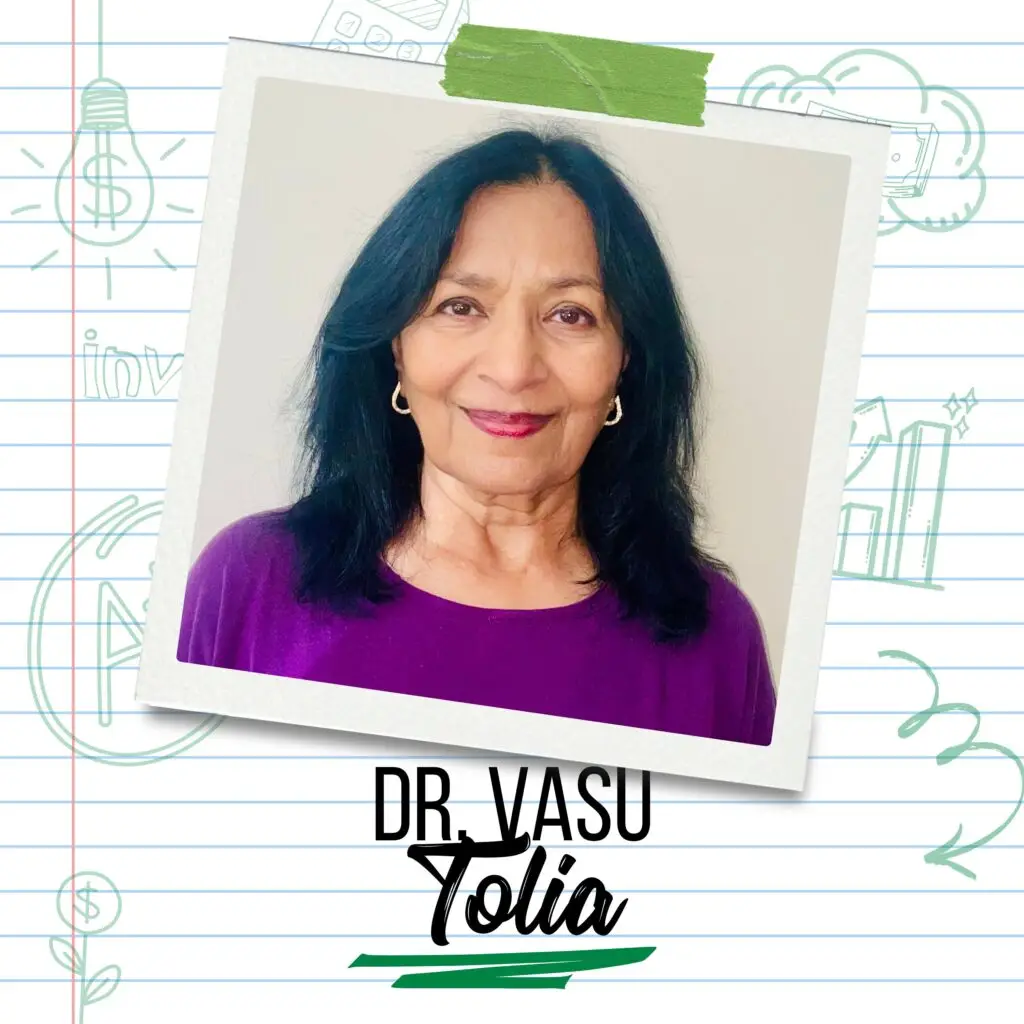
Welcome back to Don’t Retire… Graduate! Today’s episode is one that speaks directly to the heart of reinvention and the pursuit of passion long after the first chapter of your career has closed. I’m thrilled to welcome Dr. Vasu Tolia as my guest—a remarkable individual whose journey from a tenured professor of pediatrics at Wayne State University to a celebrated visual artist in Michigan encapsulates the very essence of what it means to “graduate” into your next act with purpose and joy.
Vasu’s story is extraordinary. After reaching the apex of her medical career as a physician, educator, and researcher, she faced pivotal crossroads that led her to reevaluate what truly brought fulfillment and happiness into her life. Rather than simply settling or succumbing to burnout, she took the courageous step of exploring entirely new creative avenues. From private practice to art lessons at a local center, what began as tentative experimentation evolved into a full-fledged artistic pursuit that now includes exhibitions, national accolades, and a focus on art’s potential to heal—both herself and others.
In this episode, Vasu and I discuss what it really takes to make a major life and career pivot—especially after achieving success in a field that most would find hard to walk away from. We delve into the role of family support, rediscovering latent passions, and how her medical background continues to inform and inspire her works of art. Vasu shares how art became a therapeutic outlet during trying times, including the onset of the COVID pandemic, and how her pieces have even been recognized by national publications and the CDC. We touch upon the evolving fields of art therapy and neuroarts, and how creativity—in all its forms—can serve as an indispensable tool for emotional well-being and personal reinvention at any stage of life.
5 Key Takeaways:
- Reinvention is Possible at Any Age or Career Stage: Vasu’s journey from medicine to art illustrates that it is never too late to follow your creative instincts, pursue new passions, or find fulfillment in unexpected places.
- The Importance of Family and Community Support: Family played a crucial role in supporting Vasu’s pivot, reminding her that success is not always measured financially but through personal fulfillment and impact.
- Art as Therapy and Healing: Creating and viewing art can serve as powerful emotional outlets—helping to process change, relieve stress, and provide solace during challenging times, as evidenced by Vasu’s work during the COVID-19 pandemic.
- Your Identity is More Than a Job Title: We discussed the tendency to conflate who we are with what we do, and how embracing all facets of ourselves—including new talents and interests—can lead to a more authentic and rewarding sense of self.
- Bringing Purpose to the Next Chapter: Rather than simply retiring, Vasu is committed to spreading a message of healing and empowering others through art and creativity, seeing this as her next legacy.
Join us as we explore how embracing change, creativity, and self-discovery can lead to a vibrant, impactful life—no matter when you start. Don’t forget to subscribe, rate, and share this episode with anyone who might need a little encouragement to chase a new dream or reinvent themselves with purpose and passion!
About Dr. Vasu Tolia
Vasundhara (Vasu) Tolia exemplifies the art of thriving through reinvention. A former tenured Professor of Pediatrics at Wayne State University, Vasu successfully transitioned to a full-time artistic career, becoming a celebrated Michigan-based visual artist known for her vibrant acrylic and mixed media works. Embracing a significant mid-life career change, Vasu channeled her scientific background into a new passion, creating art that bridges emotion and intellect. Her journey from medicine to art demonstrates the power of following one’s creative instincts and the potential for success in new endeavors at any stage of life.
Since her career transition, Vasu has:
- Participated in over 100 juried group shows from 2015-2024
- Held multiple solo exhibitions, including at the prestigious Scarab Club in Detroit
- Won numerous awards, including the Future of Art Global Masterpiece Award (2024) and Silver and Bronze recognitions from Art Ascent Magazine
- Had her work featured in public collections and on the cover of scientific journals
Vasu’s unique background allows her to create art that promotes healing and supports charitable causes. Through her website, www.vasutolia.art, she connects with various charities, using her art as a medium to raise awareness and funds for important social issues.
Transcript
Welcome to Don't Retire Graduate, the podcast that asks you what you want to be when you grow up so you can graduate into retirement with a purpose and a passion. I'm your host and valedictorian, Eric Brotman, and we're excited to be bringing season six to our growing audience. We'll be bringing you exciting guests every other Thursday and on alternating weeks we'll be bringing you the Diary of a Financial Advisor segment, which we know you'll enjoy, so. So please subscribe, follow us and check out our new episodes every Thursday. Today I'm pleased to be joined by Wasu Tolia. Hsu exemplifies the art of thriving through reinvention. A former tenured professor of pediatrics at Wayne State University, Hwasu successfully transitioned to a full time artistic career, becoming a celebrated Michigan based visual artist known for her vibrant acrylic and mixed media works. Embracing a significant midlife career change, Hwasu channeled her scientific background into a new passion, creating art that bridges emotion and intellect.
Eric Brotman [:Her journey from medicine to art demonstrates the power of following one's creative instincts and the potential for success in new endeavors at any stage of life. Hwasu welcome to Don't Retire Graduate.
Vasu Tolia [:Thank you, Eric. So honored to be on your show.
Eric Brotman [:Well, I'm excited to have you. And you know, we talk about career pivots. I don't know that there's. I'm not aware of any larger career pivot than from medicine to art. And so let's begin at the beginning. You. I presumably studied and did all the science prerequisites and the med school and the residencies and all the things to become a physician and then a professor and then said this isn't for me. So can you share sort of the background of the story so that we can highlight that pivot in a few minutes?
Vasu Tolia [:Sure. So I was at the peak of my career and was very happily doing mentoring, teaching, doing research and seeing patients. And that was my life. But then at that point in my life there was a change in administration and they told me they wanted me to do basic research because I was a superstar and I would excel there and it was not my cup of tea. And in short, my life became very difficult and I decided this is not how I wanted to be. I was going to move to another place, another city, to become the second in command there. But then I realized that I would be uprooting my whole family. My husband had a very thriving career.
Vasu Tolia [:He was the chief of endocrinology at his hospital and I said, for maybe a few more papers and a few more years of doing this, I can't just spoil everything. I have to do something else. So I tried private practice and I was able to do research over there also. But it just wasn't challenging enough. It just wasn't making me happy anymore. So I decided to find other avenues and step out into an unstructured world and find myself again. Because there was no way I was going to just sit at home and watch TV or just watch movies and things like that. I had to fill that void with something.
Vasu Tolia [:I tried doing some music, singing and all that, but it didn't gel out. Finally, when I started doing drawing and painting, I took a few lessons at a local art center. And that also took a while because in the beginning I felt like, you know, everyone does. I can't draw a line and art is not for me. It took me a few years to find those shadows and light and shapes and everything. But finally it happened. And when it happened, I knew that this was going to be my new path.
Eric Brotman [:So you and your husband are both have medical backgrounds, presumably making a significant living at that stage financially, and you were trying to figure out a little bit, I dare say, what you wanted to be when you grew up, which we'll get to. But did you know you had talent in this area? Or how did you choose art? I guess you chose music first, but how did you choose that? Because medicine, I would think is incredibly left brained and art is incredibly right brained. And I don't know that many people who would admit to having both, but it sounds like you have both. So how did you decide that that's what you wanted to do?
Vasu Tolia [:You know, it was just a matter of experimenting and finding out. At one point while I was doing, you know, in the midst of my thriving career, there are chances of burnout and things like that when you're working this hard. So I joined a book club because it made me read outside of just reading the scientific literature and journals and everything like that, at that point I had thought about that, you know, maybe I should be doing some art. I bought some supplies, but never really got around to doing it. So I think right from that time, you know, and that was about 15 years before all this happened, that maybe it was in the back of my mind and I just. It came to the forefront at that point.
Eric Brotman [:Were you pressured somewhat as a young woman by family, parents, grandparents, anything related to that? That said, you're going to be a doctor, this is your path, or was that something you really wanted organically?
Vasu Tolia [:Not at all. I call myself an accidental doctor. And, and I really told this in a book that was recently released in which my story is published with 14 other stories which are considered inspirational. Inspirational in this book called Mastery Unleashed. And I say in that, that when I was in ninth grade we had to choose between arts, business and science. And I was going to choose arts, but my best friend, her brother was studying medicine so she told me, let's just do biology and you know, we'll become doctors. And I became a doctor because I chose that. And she told me that my parents never said anything.
Vasu Tolia [:My mother said that do not become a doctor if you're just going to get married and not practice. That's what my mother. That was this, you know.
Eric Brotman [:Yeah. Well, and all of those years of education and tuition and heartbreak if you're not going to practice, if you're not going to use it. You know, it's interesting. Years ago I studied liberal arts in college, I studied English and psychology. And my plan was to go to law school. And at one point I took the LSATs, I applied to law schools, I got into law schools, I even paid a deposit for a law school. And then I didn't go. I said, something's not right, this isn't my path.
Eric Brotman [:And that's when I found the, the financial world, which is not what I had studied. So now I, I discovered that at 21, 22 years old, not in my mid career. So I think you're, you're, there's a little bit more, there's a little bit more risk. I think when you're in the middle of, of a career that is thriving as you, as you put it, and you decide to pivot. Do you have family? Do you have children? Was this something that you discussed with your husband? Like how did you decide? Or did you just say I'm doing this and I love it and I'm chasing my passion?
Vasu Tolia [:Yes. I have two sons and my husband and my sons have been fully supportive with all my decisions. And in fact, sometimes when I'm at a solo show and I have a solo show and I have sold only three or four paintings out of 24, I'll say, you know, only this much was sold. And one of my sons said, mom, you're not doing it to make money. You're doing it because you want to paint and you want to have your charity driven missions. So don't worry about how many sales are there.
Eric Brotman [:No, they are very helpful and that's Your son's advice. That's good advice.
Vasu Tolia [:Yes.
Eric Brotman [:So there's. There's a. I think, a confluence in your world of joy and success. Success is measured lots of different ways. Financial success is one, but there's lots of other ways to measure success. And you found joy in your work. So what inspires you to paint the things you do? What. What.
Eric Brotman [:When you sit down with a blank canvas? What. What's going through your creative process? What's going through your mind?
Vasu Tolia [:That's also been a significant journey because when you are beginning to learn, you are following the traditional classic representational art. Like, you know, you look at a figure and learn to draw a figure or a head. Like even in the landscapes and everything, you're usually. You're not starting by just going out in the nature and doing it. You're just looking at a scene, like in a photograph and doing it. So I did that for a while, and I did quite a few animals because my children loved animals. But during COVID time, I realized that I didn't want to continue to do that. And I decided to liberate myself in the realm of semi abstract and abstract world.
Vasu Tolia [:And I felt. I found myself because with the COVID happening the way it was, I felt my inclination was wanting to be in the front lines, but because of my age and everything, I couldn't have done that. So I decided to express myself in art. And I created a number of COVID related paintings. And Washington Post had a call for art, and I submitted one of them and it was selected as top 20 in the nation. And I was thrilled. You can mention. And the year after.
Eric Brotman [:Yeah, that's a big deal.
Vasu Tolia [:Yes. And the year after that, CDC contacted me and said they wanted to use it for the COVID of their journal called Emerging Infectious Diseases, which was basically dedicated to Covid. And that really was one of the biggest honors of my life that, you know, why medicine and art came together.
Eric Brotman [:Now, does medicine still continue to inspire some of the work you're doing, or have you branched off to where that's really sort of in your. That's in your past much more than it's in your present?
Vasu Tolia [:No, it's very much still in the present. Because previously I felt that I helped through medicine per se, like taking care directly of the patient with medications and procedures and assessments and all. And now I'm healing through art because I am really dedicated to creating pieces that fulfill my missions. And one of them is healing and creating serene art or inspiring art for spaces like hospitals and corporations and public Spaces, you know, where people can be stressed and they need an outlet to relieve their stress. By looking at it, you know, they, they feel calmed.
Eric Brotman [:Okay, so, so there's a, there's a medical or psychological rationale behind some of the work that you're doing. And, and you know, there, there's such a thing as art therapy. I understand. Are you an art therapist? Are you familiar with that field? I, I don't really understand it. I don't know a whole lot about it. What is that?
Vasu Tolia [:You know, it's a, it's a new field. Like, it has come to the forefront in about last 25 years. And I was not familiar with it, to be honestly, until I experienced it myself, because by doing all this semi abstract and abstract art, I didn't realize I was releasing some of the emotions and feelings that I was holding in myself at the change of career. As to how from being on the top of your profession, you're starting as a novice, like, you know, learning all over again your ABCs and 1, 2, 3 kind of things. And I didn't realize it, but it's become a therapy for me. And that's when I realized that my mother, you know, after her grandchildren grew up and they would no longer be occupying her time, she used to draw and color a lot. And I didn't realize, I would think, why is mom sitting and drawing for hours and doing it? And how can it be helpful? And now I realize how stupid I was that I didn't know the concept that she was practicing art therapy without having been prescribed anything. And because of my medical background, now I'm looking a lot into the neuroarts and getting into understanding it more.
Vasu Tolia [:So I'm not an art therapist, but I do know about the concepts and everything, and I'm really looking more and more into it and trying to get into studies with, like, institutions, you know, where I can connect with somebody conducting the neuroscience research on the effects of art on the brain and studying a lot more about it.
Eric Brotman [:So I, I think feng shui has been part of, of Eastern culture for thousands of years. And it's this idea of comfortable spaces and energy. And, you know, I, I, I will confess to being a complete Westerner and therefore raising one eyebrow when I think about some of those things. But having tried acupuncture, I now believe in that. So they're, they're onto something. It's been going on for thousands of years. There must be something to the environment in which you are there. Some people feel like their desk has to be Very clean in order to function.
Eric Brotman [:Other people can't function that way. They want to have piles and their own chaos. And is this. I guess this is just a personal thing that different people thrive in different environments. And so a piece that you do might speak to one audience or one family or one human, but not necessarily to everyone. And so it's very much in the eye of the beholder. It's a very personal thing. Is that true?
Vasu Tolia [:You asked a great question, and it's very true. It's very subjective. Like, somebody may be totally enamored by one piece of art and another person may just hate it. And a perfect example of this is like, you know, when you enter a show or a competition, there is a tutor, and he or she decides, you know, which are the pieces worth keeping or selecting for that exhibition or which one should get an award. So there might be an instance where in one submission I didn't even get accepted, but in another one, the same piece of art can win an award. So it is a very subjective thing. Like, even when you go to museums and things like that, you will see that there are some pieces people like. Like, I personally learned and read a lot about impressionists and things like that.
Vasu Tolia [:The medieval art, the one that reflects, like the Christianity and the wars and things like that. Those pieces don't appeal to me as much. So it's the subject of the topic and the person's frame of mind when they are visualizing. It also makes a difference because one gets these healthy neurotransmitters released from the brain not only by creating art, but also by viewing art. And I find that when I make some of the abstract pieces, you look at it in different lights from a different angle. You will see something different every time you look at it. So to me, that way, that kind of semi abstract and abstract art is becoming more appealing. And some people just like to be able to see what they want to see in it, like a landscape or a forest and a flower and things like that.
Vasu Tolia [:But not everybody feels that way. At some of my solo shows, people come and ask me, what does this mean? Why did you title it like this? Then I explained to them what I see in it, and that's how the title came. And then they seem to understand and accept it, but by they themselves, they didn't realize that. But it's, you know, you have to spend some time in front of it. You know, you just can't pass by and say that, you know, I didn't see that. Or they will see things in it, they will come and tell me that I didn't realize and felt. So there is such a subjective feeling in viewing art.
Eric Brotman [:All right, so I get to ask you a medical question now related to this, because now I'm curious. This is a world we're in where people are scrolling through things in less than a second nanoseconds, as opposed to walking through in a leisurely way, walking through a gallery and maybe looking at these kinds of things. Are we. Are we missing. Are we missing something important when we do that? When we don't allow our brains or our bodies or our. Or just our people to, as you say, sit with it and spend some time with it? I gotta think that young people today who have never done that and instead are just whipping through images are missing it entirely and that their brains aren't getting anything out of that. Is that. Am I onto something here or am I making that up?
Vasu Tolia [:No, you may be onto something because, you know, everything takes time. And you can't just rip through the. An exhibition and say you saw it, but. Because you have to give it time. But it also, based on your interests, whether you're interested in viewing it and learning something from it and actually experiencing it, you know, is probably a better word. You know, even the tutors, like one of the workshop persons, you know, he was a juror at a meeting, and he told me that when they project images of the artworks that are submitted, they are on there for seven seconds. And during that time they have to write down or decide whether this should be accepted or needs a second look or something like that, because there are thousands of images. So I think it's such a world that I don't know whether there can be norms about deciding.
Vasu Tolia [:But if something is fleeting by and it catches your attention, create some kind of a response within your mind, then you probably will go back to it or stay there and look at it more closely. So it's like any object of interest. You know, like, you go to a mall and I see a dress that instantly appeals to me and others, I will just pass by and do nothing. So I don't think there is anything we can do about this.
Eric Brotman [:Okay, so a lot of our audience are folks who are trying to figure out how to reinvent themselves. You know, what are we. What are we moving towards as opposed to what are we moving away from? You know, we don't. I don't believe that retirement is the absence of work. I think it's the absence of needing to work. And financial independence is really what Matters from that standpoint. So you can chase your passions and do things that are fun. But you know, there are certain, there are certain industries where you know you're going to change careers.
Eric Brotman [:Professional athletes, people who are athletes, their, their life generally will be much longer than their career because there comes a point where you just can't do that anymore. And a lot of these, you know, young men and women struggle because they tie their identity to that and then they no longer have it. So did you tie your identity to you were a doctor? Was that something. Because I know a lot of doctors, that's a matter of incredible pride and it's an incredibly important piece of their world. Did you feel like you lost some of that identity or did you feel like you enhanced it and added another facet to that from, from, from your standpoint?
Vasu Tolia [:You know, I'm so glad you asked that question and you put that so succinctly. And actually probably part of the answer is in your question itself. No, I have never felt I'm not a doctor anymore because to be honest with you, like, I was continuing to do research and everything. I still consult, but I don't see patients because of my research background. I get asked to do consult on the studies and things like that. And you know, curbside consults are always there from friends and relatives and things like that. But I feel that I am what I am because of having been a doctor, that I has this passion and purpose for healing. And now I'm able to combine it through a different avenue and not heal directly by laying my hands on the patient or sitting with them and going over the condition and things like that.
Vasu Tolia [:But I'm able to heal in a different way by hopefully instilling some positive vibes in their minds by looking at my art. And I really feel that I'm doing both right now, but mainly more emotionally than physically. So I'm really proud of what I was and I still am because I have taken lessons from what my task was like, keen observation, seeing behind the scenes things and reading between the lines and all that. And I apply that all because that's all part of you. You know, you can't just associate it from having been one person and another. It's more of a sequential building on top of what was the base rather than, you know, two separate buildings altogether.
Eric Brotman [:I love that. I really love that. And I'm sort of going through it personally myself because I'm after 31 years looking to reinvent what I do for a living. And you know, I'm in the process of becoming non client facing and more of a business strategist and developer. And it's, it's like I haven't had a new job since I was 21 years old. And it's a bizarre experience. But I think you're right. I don't think you give up what you've already done or what you've learned or what you've learned glean from that.
Eric Brotman [:I think you build upon it so much like, much like a, an experiment, not an exponential almost kind of way that you can amplify your own abilities by having different facets and different avenues to create and to do these things. I actually am feeling totally empowered by this conversation because I know a lot of people going through it, so many people, we have a habit of tying who we are, confusing who we are with what we do. And if the first answer you give when somebody says, you know, tell me about yourself or who are you? And the first thing you say is, I'm a doctor, I'm an architect, I'm an accountant, whatever it is, that's not who you are, that's what you're, that's what you do. And I think we, instinctively, it's almost like rather than sharing a little bit about ourselves, we share a piece of our resume instead of a piece of ourselves when we, when we meet people. And I don't think that's good, I don't think that's good for us. And, and we all do it. I, I, I'm painting everyone with the same broad brush. Not, no pun intended, but I, I do think there's something to that.
Eric Brotman [:So we're, we're, we're running low on time and I, I have to ask you, is there another pivot in your world? Is there something else coming? What do you, what do you want to be when you grow up? Not what do you want to do, but what do you want to be when you grow up?
Vasu Tolia [:Up? I'm constantly evolving. Another thing I do do is write some poetry on the side. Like, I'm in the process of writing two poems because I spent a month in LA and it was during the time of fires. And we were deeply affected by what happened, although it didn't directly involve us, fortunately, but we were there and the morale and everything was so low. So I want to create artwork related to that. Like, you know, women with, you know, running from those fires, but with flowers on their side on top of the flames, saying that there'll be resurgence, you know, so I'm thinking along Those lines. But then another good thing I did was my grandchildren, you know, they spent some time with me painting. So I did some paintings in collaboration.
Vasu Tolia [:Like my oldest grandson, I was talking to him about my next solo show and what I wanted to do and he said, daddy, I want to help you and I want to do something. So he did the background on my concept and then he got busy in school so I did the foreground. Then I have a 2 year old baby grandson, another grandson. And then I was painting and he wandered in and sat in my lap and I said, you want to paint? And he created a few strokes on my painting and I preserved those, you know, and I'm going to call them collaborative paintings. So if I can continue this mission of healing and try and empower people and suggest to them that even in your everyday stresses, if you put some part of your time, like you know, even 10 to 15 minutes a day and try to de stress yourself by practicing some of these things. And because I'm in visual arts, I'm talking about that. But it doesn't have to be visual arts. It can be music, dancing, cooking, whatever that person's passion is running, taking a walk in the nature and just trying to de stress yourself that way.
Vasu Tolia [:Then I think if I can spread this message and help people become more productive, that will be one of my biggest legacies that I can leave. And in the my next phase, well.
Eric Brotman [:My, my money is on you also. I have no doubt that that's what's coming. I How can folks who are interested in the work you're doing, in the research you've done, or in the art you've created. How can folks get in touch with you or learn more about you?
Vasu Tolia [:They can Visit my website, www.wasutolia.com and they can also reach me through the website and ask any questions they have or want to know more about it. And for your listeners, I'm going to give you a downloadable link where they can find them, you know, access a seven day little exercise routine to de stress to empower this.
Eric Brotman [:Yeah, we could all use some of that. So we'll make sure to get that from you and to put it in our show notes. Thank you for doing that and thank you for spending time with me today. This is been a unique conversation and you have a unique story and so I thank you for sharing it with me and with everybody who listens.
Vasu Tolia [:Thank you so much, Eric. It was my pleasure and honor to be on your show.
Eric Brotman [:I'd like to thank all of you for listening and watching today. If you like our show, please subscribe, leave a rating on your favorite podcast platform and share it with your friends and family so they can join you on your journey to financial freedom. If you'd like to send us a topic or idea we might discuss in a future episode of Don't Retire Graduate, please post that on our Facebook page or tweet us. Rotman Planning we'll be back next week with another entry in our Diary of a Financial Advisor, and in two weeks with another engaging guest. For now, this is your host, Eric Brotman, reminding you. Don't Retire Graduate securities offered through Kestra Investment Services, llc. Kestra is member FINRA SIPC Investment Advisory Services offered through Kestra Advisory Services, llc. Kestra as an affiliate of Kestra is Kestra Is or Kestra as are not affiliated with Brotman Financial or any other entity discussed.